
Arden Screen and Stage Make-up
Exactly where Elizabeth Arden’s decision to get involved with Hollywood came from is anyone’s guess. Jock Whitney, Hedda Hopper and Robert Rubin have all been suggested as guiding hands (Woodhead, 2004, p. 211). My money would be on John ‘Jock’ Hay Whitney a renowned polo player whom Arden knew from the racetrack. He was amiable, handsome and the sort of East Coast person with social connections that Arden admired. Whitney also had a large financial interest in the film industry and in Technicolor in particular.
Technicolor
Technicolor had been in existence since 1916 but its high cost and technical limitations had made it difficult to sell to the studios. However, in 1932, the Technicolor Corporation had developed a new three-strip camera to record red, green and blue light on three separate negatives. In 1932, Whitney invested in the Technicolor Corporation and then co-founded Pioneer Pictures in 1933 to produce Technicolor pictures using the new camera. Pioneer Pictures produced the first three-strip Technicolor short film, ‘La Cucaracha’, in 1934 and first feature film, ‘Becky Sharp’, in 1935.
The three-strip Technicolor camera required brighter lights than those used to film in black and white and this created problems with make-up. The make-up used at the time had a slight sheen and the extra light reflected colours from scenery and costumes onto the actor’s faces, creating undesirable effects – faces could look flushed, sallow, or ill depending on the surroundings. Whitney would have been well aware of the issue and it is possible that he consulted Elizabeth Arden about it one day at the racetrack.
DeLong Laboratories
Whatever the cause, once Arden became interested in film make-up she invested heavily in the project. In 1935, she bought DeLong Laboratories Ltd. – based at 5533 Sunset Boulevard, Hollywood – and folded it into the Elizabeth Arden empire as a separate division – Screen and Stage Laboratories – with Duke Cross (an ex-musical comedy actor) placed at the helm. In 1936, she also established a factory in London to make Screen & Stage Make-up there.
See also: Elizabeth Arden (1930-1945)
The DeLong Laboratories and Make-up Studio had been experimenting for many years with film make-up and had developed Nuchromatic Make-up for Panchromatic Film. Unfortunately, I have been unable to determine anything about its formulation.
Due to the high red sensitiveness of Panchromatic film any make-up containing too much red must be used in relatively dark shades to obtain a satisfactory photographic result. With De Long Nuchromatic Make-up comparatively little red coloring is used and the result is a more neutral blend enabling a lighter more natural-looking make-up to be used.
(Nuchcromatic advertisement, 1934)
Screen and stage make-up
The purchase of DeLong Laboratories enabled Arden to launch her ‘new’ Screen and Stage Make-up line in the same year. Many of the items retained the badge of Nuchromatic Screen and Stage Make-up but others were simply labelled Screen & Stage Make-up by Elizabeth Arden. As with the packaging, Arden also reworked some of the DeLong advertising copy.
This enchanting Screen and Stage Make-up, acclaimed by the greatest artists of stage and screen—is a complete departure from ordinary heavy greasepaint. It is perspiration proof, light-and-heat proof, and clings for hours without renewal! It will not clog the pores or harm the skin … it is made of the purest ingredients obtainable. It completely conceals freckles! It feels extremely cool, comfortable and satin smooth on the skin.
(Drug and Cosmetic Industry, 1935b)
The line met with little success in Hollywood or elsewhere. It was used in two films Jock Whitney had a financial stake in, ‘A Star is Born’ (1937) and ‘Nothing Sacred’ (1937), both made by Selznick International.
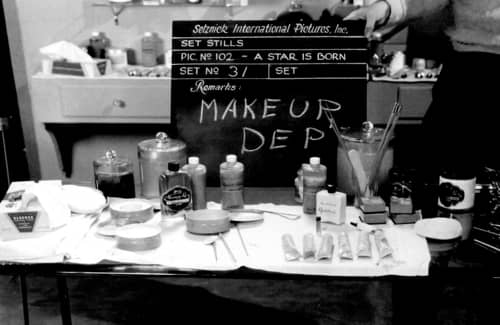
Above: Arden Screen and Stage Make-up being used as a prop on the set of ‘A Star is Born’ (1937).
Whitney had been made chairman of the board of Selznick and had invested heavily in the company when it was formed in 1935 following David O. Selznick’s departure from MGM. Other films that used the make-up included Ebbtide (1937), a Technicolor film from Paramount Pictures, and Tovarich (1937), a black and white picture made by Warner Bros.
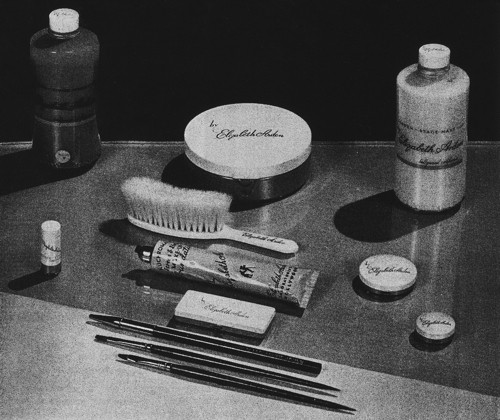
Above: Assorted Screen and Stage Make-up. The foundation was sold in jars and tubes with the tubes having a new ‘No-Kap’ closure.
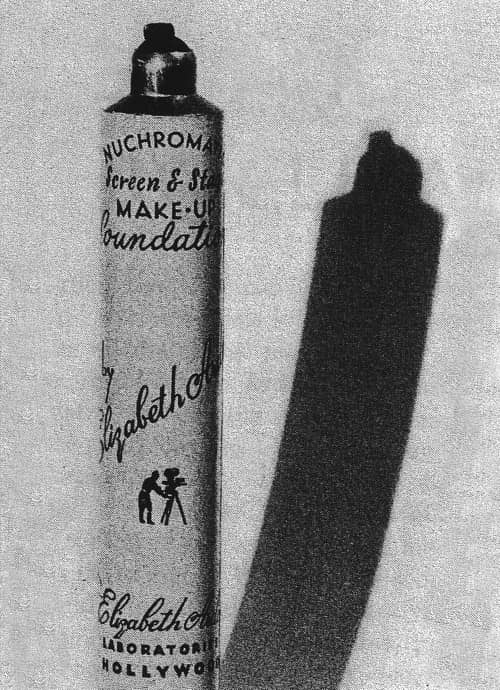
Above: 1935 Nuchromatic Screen & Stage Make-up by Elizabeth Arden. The foundation also came in jars.
Application
Most of the materials required blending after being applied. At least two shades of foundation were to be used when making-up and the same was expected when using the liners (eyeshadow).
The foundation, which is sold in jars as well as in tubes … is the base for the new make-up procedure which is used. This foundation is furnished in a variety of shades and at least two shades are used in making up—blended and modelled together.
The eye make-up involves two shades of eye-shadow which Arden calls “liners” in this Nuchromatic system, for example, a brown underneath, accented with blue. The lashes are outlined with a black make-up pencil, then a dot of red rouge is placed in the inner corner of each eye and mascara is used on the lashes.
Paste rouge is applied high on the cheek-bones, but the whole tendency is to play down the use of rouge and secure a warm, ivory tone. Powder goes on with cotton and is carefully blended with a specially prepared camel’s hair brush. A special brush is also used for filling in the paste rouge on the lips after they have been outlined with an indelible red make-up pencil.(Drug and Cosmetic Industry, 1935a)
General use
It is clear that Arden intended to extend the use of ‘Screen and Stage’ make-up into general consumption rather than keep it exclusively for theatres and films – Robare DeLong had the same idea and was negotiating with department stores in California to get them to stock his make-up when he sold to Arden. As well as being used for amateur or private theatricals, Arden recommended it for “that extra-special party, masquerade, or gala evening occasion, for professional or amateur photography”. As the make-up was waterproof (requiring its own special remover) she also suggested it for swimming, the beach, and active sports (Drug and Cosmetic Industry, 1935a).
The drama of Screen and Stage Make-up is not limited to the theatre; it has an important place in the chic woman’s private life. There is nothing more glamorous for gala evening occasions than Screen and Stage Make-up. No matter how dazzling the lights, it is always flattering. No matter how long the party, your make-up remains flawless and flower-fresh.
(Arden Screen and Stage Make-up advertisement, 1937)
Unfortunately, make-up designed for theatrical work did not necessarily work more generally, as Arden herself noted.
The $1 lipliner should have a good market … it’s absolutely perfect! The Foundations, Eye Shad-O and Mascara should also sell well. I don’t think the stores should have very much powder, it’s better to use our own as the “Screen” one is too heavy for ordinary use.
(Woodhead, 2003, p. 213)
Some sections of the industry also expressed doubts.
One of the leading cosmeticians has already introduced a stage and screen make-up which is designed to appeal not only to the actress clientele but to other women as well. This make-up is light in texture and far more effective than the old-time mask which was formerly theatre tradition. Women had nothing to learn and apply from the grease paint era; and, in fact, were led to consider an approach to heavy make-up as quite unsuited to a lady. Now, both the theatre and the general public have met on common ground.
This stage and screen make-up is creamy in consistency and the colors are developed with a loverly depth which will not fade under lights. How practical this is in everyday life, whether a woman wants to appear perfectly made up from luncheon through dinner and into the evening or under a photgrapher’s glaring bulbs.(Hart, 1957, pp. 31-32)
One of the issues with the make-up was that it was very dark. Selznick had complained about this during the production of ‘A Star Is Born’ but he could resolve the issue by adjusting the carbon arc lights (Dootson, 2016, pp. 119-120). The darkening effect of the Screen and Stage range made most of it unsuitable for everyday use and restricted it to special events that required a more dramatic look. The Max Factor Company experienced a similar problem with their Pan-Cake make-up and had to develop lighter shades before it could be sold to the general public.
As well as the products themselves, the requirements and conventions established in stage make-up could also have been an issue. The make-up had 10 foundations for screen, 20 foundations for stage, 15 liners, 10 powders for screen and 16 powders for stage. The large range would have also added to the problems Arden representatives had in persuading retailers to stock the new product line.
Screen and Stage make-up was numbered rather than named. Numbering systems have a long theatrical tradition, going back to Leichner greasepaint, but would seem strange to those not use to the idea.
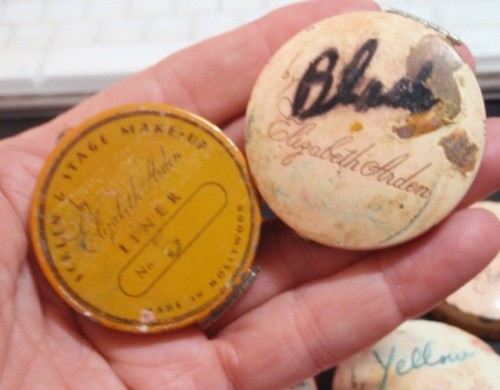
Above: Elizabeth Arden Screen and Stage make-up liners. The original packaging is on the right, updated packaging on the left. The number of the liner has been added by hand perhaps to replace a stick-on label that has fallen off.
There seems to have been some attempt to address this problem with descriptive names included on the containers at a later date.
Pan-Cake make-up
Any interest shown by the movie industry in Arden’s Screen and Stage Make-up quickly evaporated with the creation of Pan-Cake Make-up by Max Factor & Company, a matt make-up that solved most of the reflected colour problems. First used in the 1937 film ‘Vogues of 1938’, it quickly became the standard make-up used in Technicolor films for some time thereafter.
Max Factor’s son, Frank, was charged with the development of ‘Pan-Cake’ and after his father’s death in 1938 he quickly released it as a general make-up for woman. It was a huge success and other cosmetic companies, including Elizabeth Arden, scrambled to produce imitations.
See also: Pan-Cake Make-up
By the end of the decade the whole Screen and Stage project was quietly shelved having been a costly failure. To make matters worse, Frank Factor – who had changed his name to Max Factor Jr. after his father’s death – seemed to be a lot more interested in developing the commercial possibilities of make-up than his father thereby raising Max Factor’s standard as an Arden competitor.
First Posted: 16th January 2011
Last Update: 17th June 2026
Sources
Arden’s new Nuchromatic make-up. (1935). The Drug and Cosmetic Industry. 37(1). 57.
Dootson K. S. (2016). “The Hollywood powder puff war”: Technicolor cosmetics in the 1930s. Film History. 28(1), 107-131.
Hart, E. J. (1957). Capitalize on the Hollywood influence. The American Perfumer & Essential Oil Review. November, 31-32, 88-89.
Lewis, A. A., & Woodworth, C. (1973). Miss Elizabeth Arden. London: W. H. Allen.
Stage and screen make-up by Elizabeth Arden. (1935). The Drug and Cosmetic Industry. 37(3). 329, 361.
Woodhead, L. (2003). War paint: Miss Elizabeth Arden and Madame Helena Rubinstein. Their lives, their times, their rivalry. London: Virago.
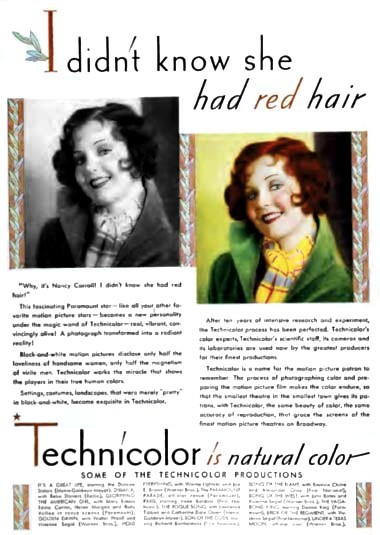
1930 Technicolor. A number of feature films are listed as having been made in Technicolor but none of them made before 1932 used the three-strip camera.
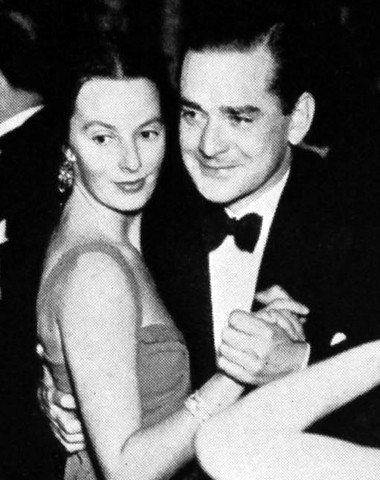
Mary Elizabeth ‘Liz’ Whitney née Altemus [1906-1988] (left) and John ‘Jock’ Hay Whitney [1904-1982] (right). Married in 1930, they had a mutual interest in thoroughbred horse racing.
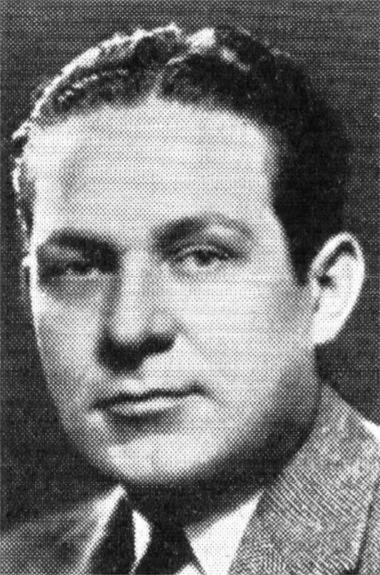
1939 Robare DeLong. He continued to work as a make-up artist in Hollywood after selling his business to Arden but subsequently moved to New York and opened a studio at 665 Fifth Avenue. He worked on Broadway, in early television make-up, and developed a new line of cosmetics which included face powder, rouge, mascara, lipstick, an astringent and a liquid cleanser.
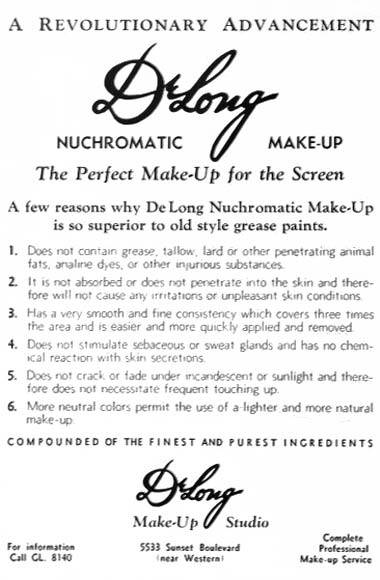
1934 DeLong Nuchromatic Make-up.
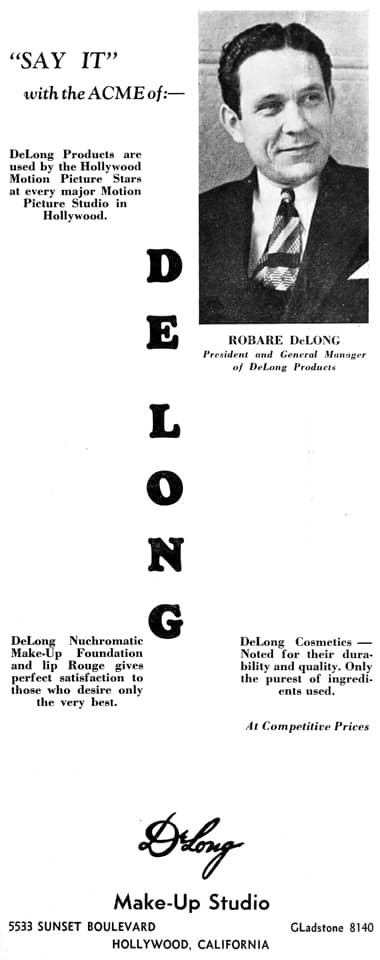
1934 DeLong Nuchromatic Make-up and DeLong Cosmetics.
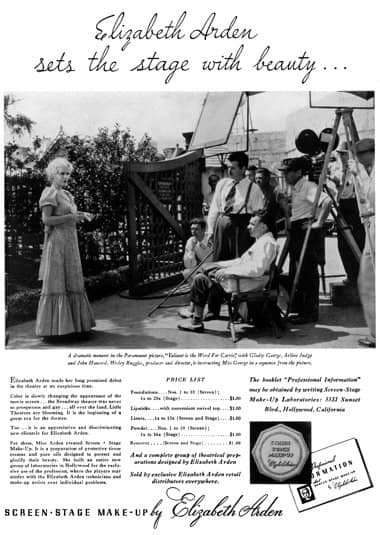
1936 Elizabeth Arden Screen • Stage Make-up.
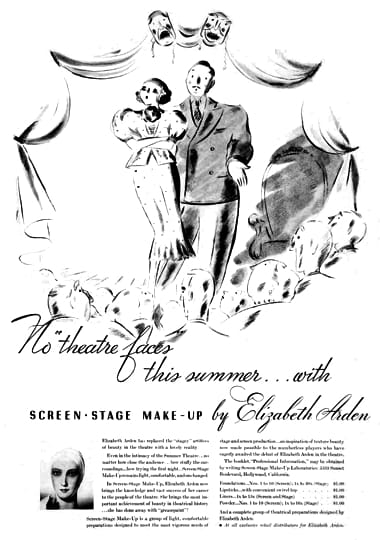
1936 Elizabeth Arden Screen • Stage Make-up. Arden appears to be unsure on how to sell it.
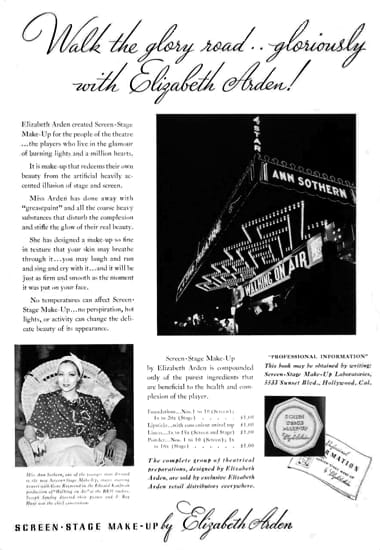
1936 Elizabeth Arden Screen • Stage Make-up.
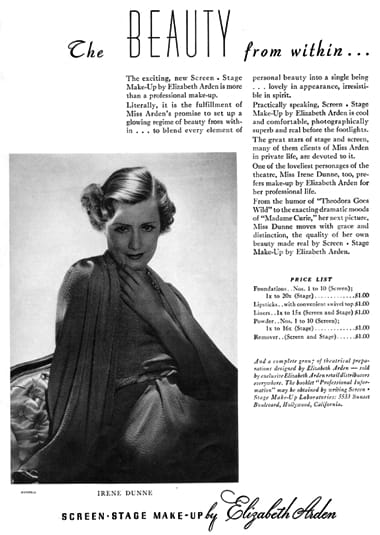
1937 Elizabeth Arden Screen • Stage Make-up.
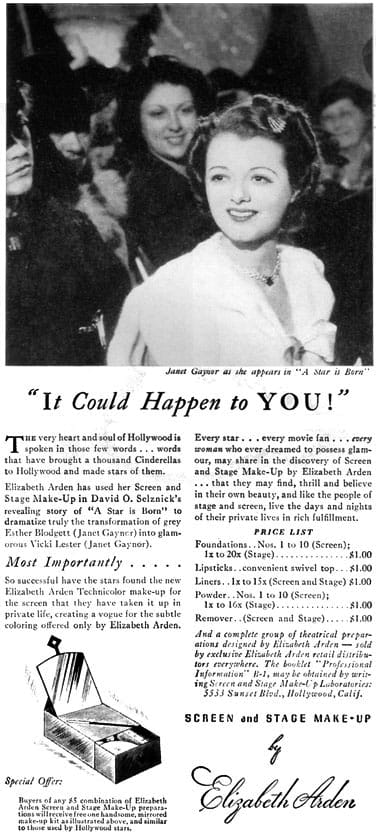
1937 Elizabeth Arden Screen and Stage Make-up.
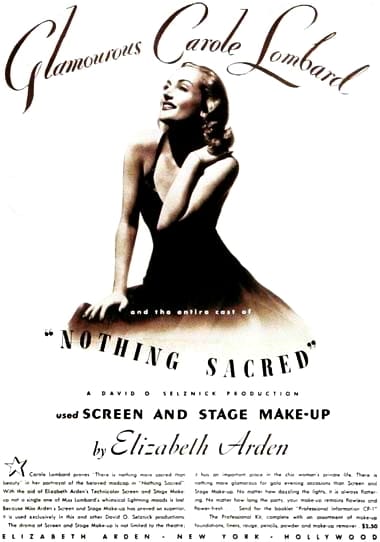
1937 Elizabeth Arden Screen and Stage Make-up.
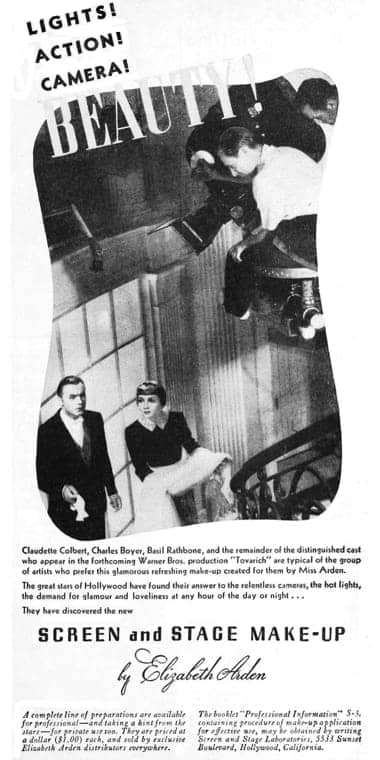
1938 Elizabeth Arden Screen and Stage Make-up.